
masthead
In this issue...
  • Onion of the Month: 10 lb. box of Jumbo Texas Onions
  • From Our Friends
  • Around the Farm
  • From Jeanie's Kitchen
  • Q & A: Bulbing
  • Fun Onion Facts
  • Send Us Your Product Reviews!
  • About Dixondale Farms

  • Affiliations
    MGA
    Plan Ahead for Best Onion Storage May 2008

    Bruce & Wife Dear Fellow Gardener,

    Whether you're well into your onion growing season or are just getting your plants into the ground, it's a good idea to start planning right now for the harvest. Why? How well your onions store depends on the treatment they receive during the growing season, when they're harvested and during storage.

    First of all, you'll need to maintain a good fungicide program during the growing season. It's a good idea to spray your onions every 10 days with Mancozeb or Seacide as they're growing, in order to extend their storage capacity.

    Harvesting at the right time is the next step. The onion tops will turn brown or yellow and fall over when the growing process is complete. You don't have to wait until all the tops have fallen over, but you do want the tops to dry completely. Once the tops have dried, it's time to harvest them.

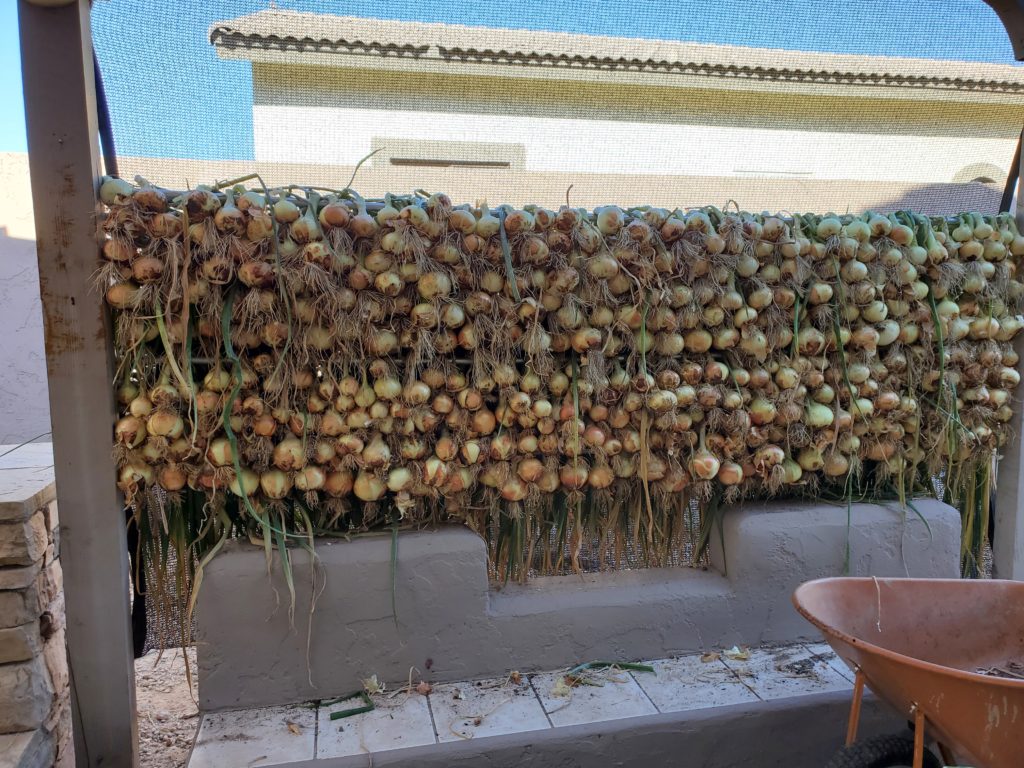
    The biggest determinant of how long your onions will last in storage is how you treat them after the harvest. They need to be properly dried and in a state of complete dormancy. To dry them properly, spread them out in a dry place away from the sun.

    Allow 2-3 weeks for drying, until the roots, foliage, and several layers of skin are all completely dried out and the skin has taken on a uniform texture and color. The entire neck should be dry, all the way to the surface of the onion, and shouldn't slide when pinched between forefinger and thumb. Once the onions are completely dry, clip off the roots and clip the tops back to about one inch.

    If your onions aren't dormant or sufficiently dry, they're susceptible to bruising and attack by decay pathogens. Neck rot is one of the more common diseases that hits stored onions, and results when soil-borne organisms enter a poorly-dried neck. It's too late once you notice the rot; you can't stop the decay. At best, you'll have to cut away the rotten portion and use the untouched section of the onion immediately -- or just throw it away. In any case, get it away from your unaffected onions.

    Don't wait until you discover your onions aren't storing well, because there's nothing you can do at that point except cry.

    Happy harvesting,

    signature
    Bruce "Onionman" Frasier

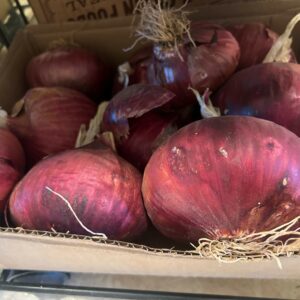
    texas sweet onions Onion of the Month: 10 lb. box of Jumbo Texas Onions
    Big on Size and Flavor Both

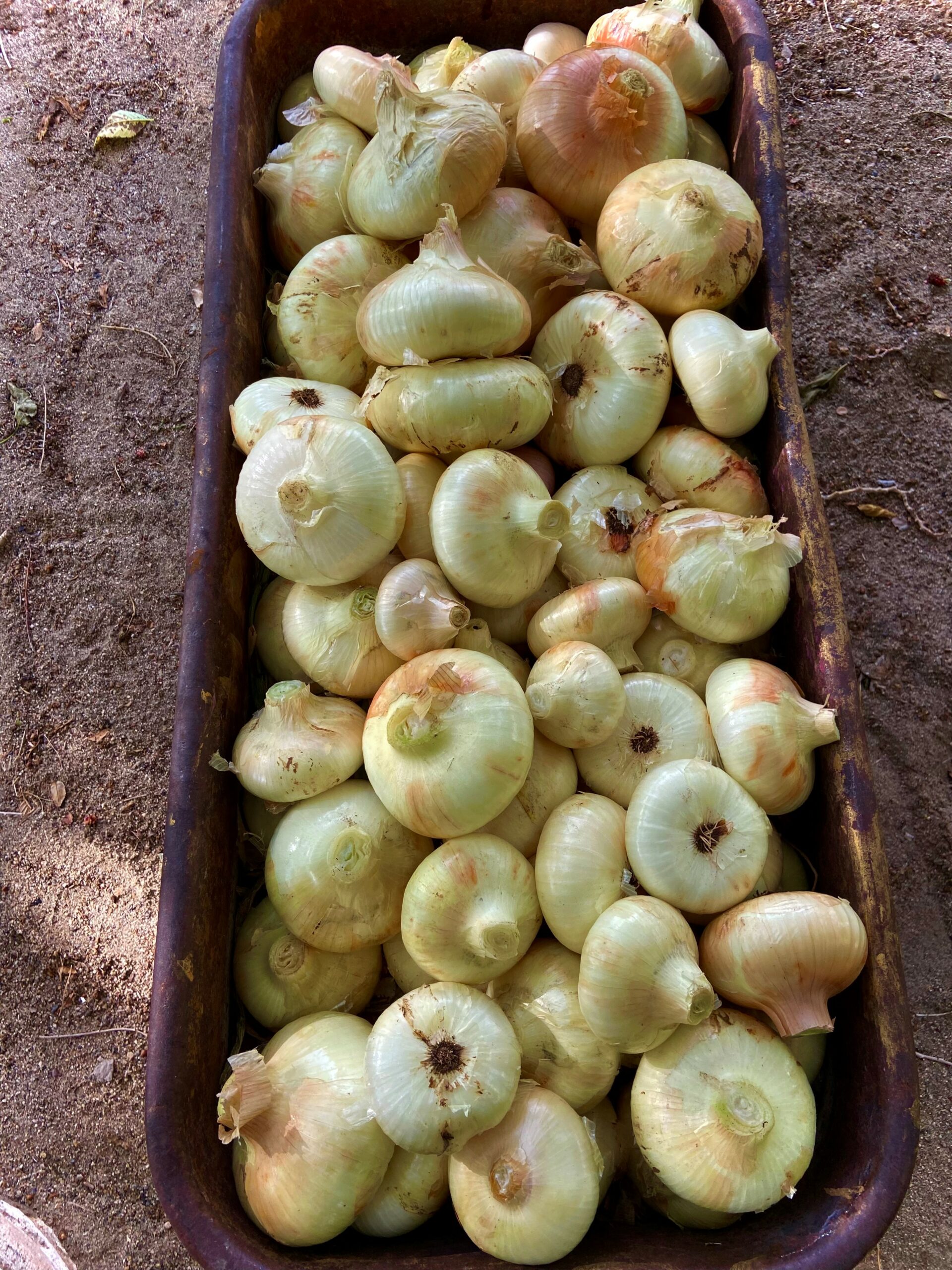
    We include only the largest, sweetest onions in these gift boxes, so you can be sure you're in for a special treat. Don't be surprised if you find fewer than ten onions in your box -- we handpick onions that are at least 3.5 inches in diameter, and some weigh in at up to four pounds. Imagine a single onion slice that'll cover an entire Texas-sized burger: that's what you get with these lovelies.


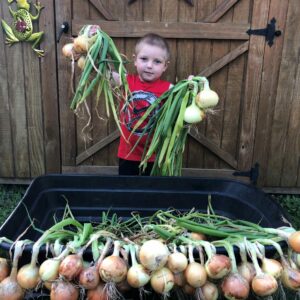
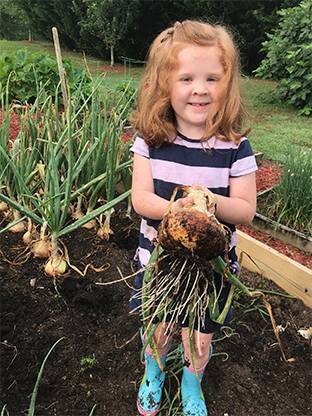
    young girl with onions - 2 From Our Friends

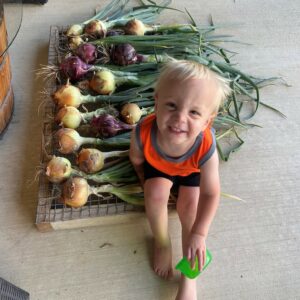
    Our friend Hank Weeber sends us this note:

    "This is my granddaughter Sarah holding some of the Candy onions we grew. Sarah and her brother Henry helped plant them. As always, your onions are fantastic!"

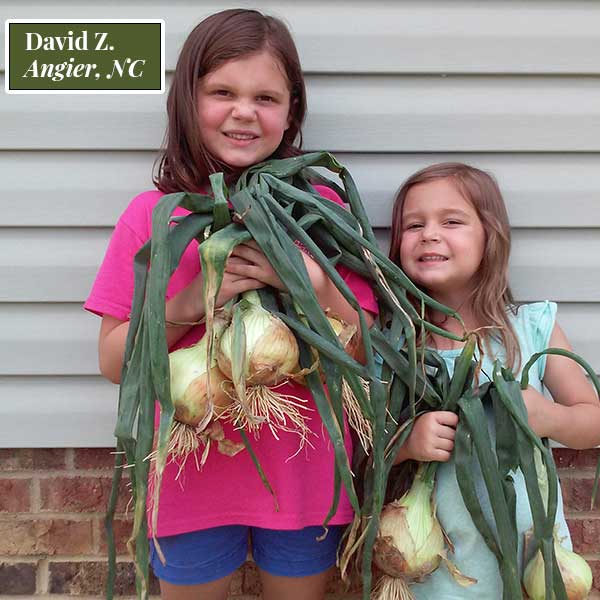
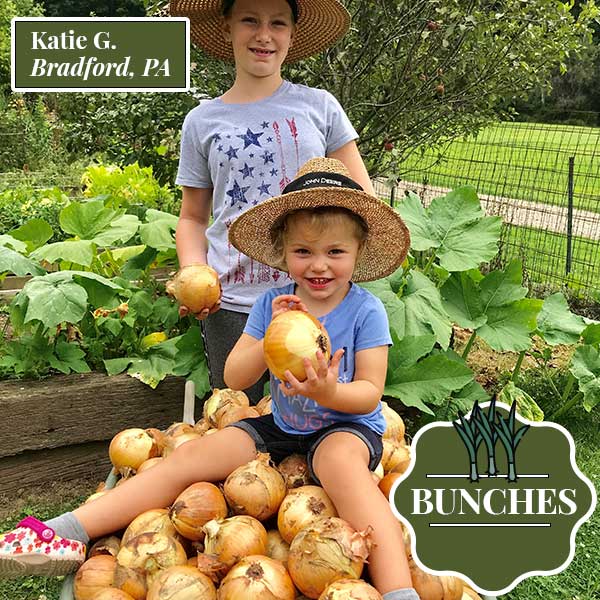
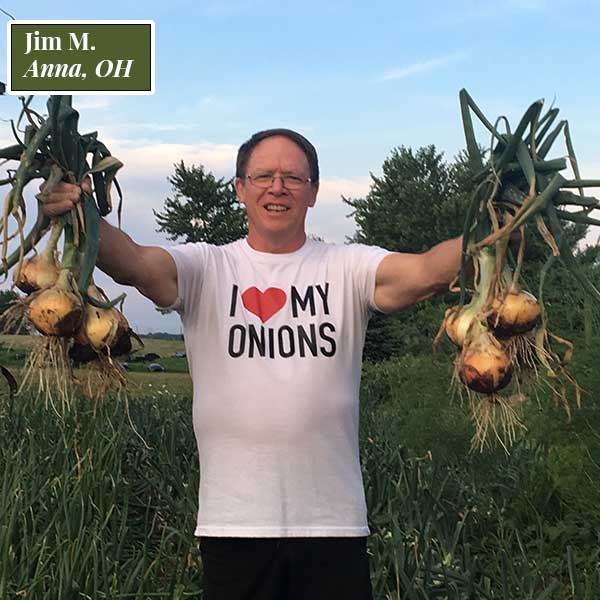
    We love hearing from our customers. Send us your favorite "onion photo" and we'll try to include it in a future newsletter, our next catalog or our upcoming online Photo Album. Click here for details on how to submit your photos.


    bruce in field - 3 Around the Farm

    I saw in a blog the other day where someone said, "Dixondale Farms' onion plants are so much better than anyone else's, or anything I can grow in my greenhouse. How do they do it?"

    Well, here's our daily routine. At 4:00 a.m., Bruce wakes up to watch the Weather Channel and local weather, and by 5:30 he's in the office preparing the daily spreadsheet for the day's harvesting. About a half-hour later, he meets with the foreman to discuss where each variety will be harvested.

    Harvesting starts as soon as the employees start showing up. By 8:00 a.m., the various containers, color-coded by variety, are distributed to the harvest locations for packing. Meanwhile, the employees at the packing shed start packing all the individual orders.

    UPS orders are packed on Fridays and Saturdays to be loaded onto refrigerated trucks to be delivered to various hubs within the UPS system. Mondays are for UPS orders that can be delivered within 2-3 days out of Carrizo Springs. Tuesdays-Thursdays are for Priority Mail boxes to be delivered by the Postal System. Over 1,500 packages are packed a day by 30 employees.

    The first load of newly harvested plants arrives at the packing shed for distribution about 10 a.m., and they continue to flow into the packing shed all day. At about 5 p.m. the U.S. Postal System picks up all the orders we've packed that day for distribution; UPS will have brought in as many as four vans to pick up all their packages during the day.

    At day's end, Bruce heads out to the farm and determines where to harvest the next day. By then, he's entitled to a cold refreshment, and it'll soon be time to start over again!


    From Jeanie's Kitchen
    Joanna Wayne's Onion Pie

    • 1½ cup of finely crushed Ritz crackers
    • 8 tablespoons butter
    • 1 medium to jumbo sized onion, sliced
    • ¾ cup of whole milk (do not use non-fat or low-fat milk)
    • 2 eggs
    • ¾ teaspoon of salt
    • ¾ cup of grated sharp cheddar cheese
    • Fresh chopped parsley
    • Freshly ground pepper to taste
    • Paprika to taste

    Thoroughly blend the cracker crumbs and four tablespoons of butter in a bowl, then press the mixture onto the bottom and sides of an eight-inch pie pan to form a pie crust. Next, sauté the sliced onions in the remaining butter in a heavy skillet for about 12 minutes, or until they're tender. Then spread the onions evenly over the crust in the pie pan.

    Blend the salt, milk, and eggs together into a well-beaten mixture, seasoning them with pepper as you go. Pour the milk-and-egg mixture over the onions in the pie pan, then arrange the cheese over the top and sprinkle on some paprika.

    Bake the pie at 350 degrees Fahrenheit for about 35 minutes, then garnish it with the parsley and serve. It'll make about 6 servings.


    Q & A: Bulbing

    Q. How can you tell when onions begin to bulb? I've seen many instructions for fertilizing onions and they all say to stop when the onions "begin to bulb." How do you know?

    A. If you plant your onions shallow (1/2 to 1" deep), you'll be able to tell easily, as they'll crack the ground and start shoving the dirt away as the bulbs grow. If you plant them too deep you won't be able to see this as easily. Plus, you'll end up with smaller bulbs, since the soil will restrict the expansion of the bulb.


    Fun Onion Facts

    The famous Macedonian conqueror, Alexander the Great, fed onions to his troops to make them valorous.


    Send Us Your Product Reviews!

    In addition to sending us photos of your onions, we encourage you to give us feedback on our products via the Product Review options on the Web site. You'll find a "write your own review" link on every product page. Don't be shy -- we need your opinions!


    About Dixondale Farms

    As the largest and oldest onion plant farm in the US, Dixondale Farms offers a wide selection of top-quality, disease-free, ready-to-plant onion plants. To see our complete product line, request a catalog, or for growing tips and cultural information, visit our Web site by clicking here.

    Whether you're planting one bunch or thousands of acres, we're committed to your success. If you have either questions or suggestions, we'd love to hear from you. You can reach us from 8:00 AM to 5:00 PM Central Time at 877-367-1015, or e-mail us any time at customerservice@dixondalefarms.com.

    phone: 877-367-1015