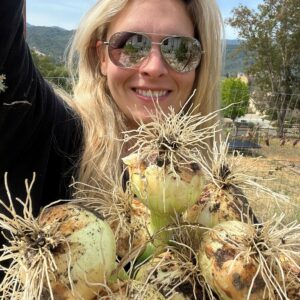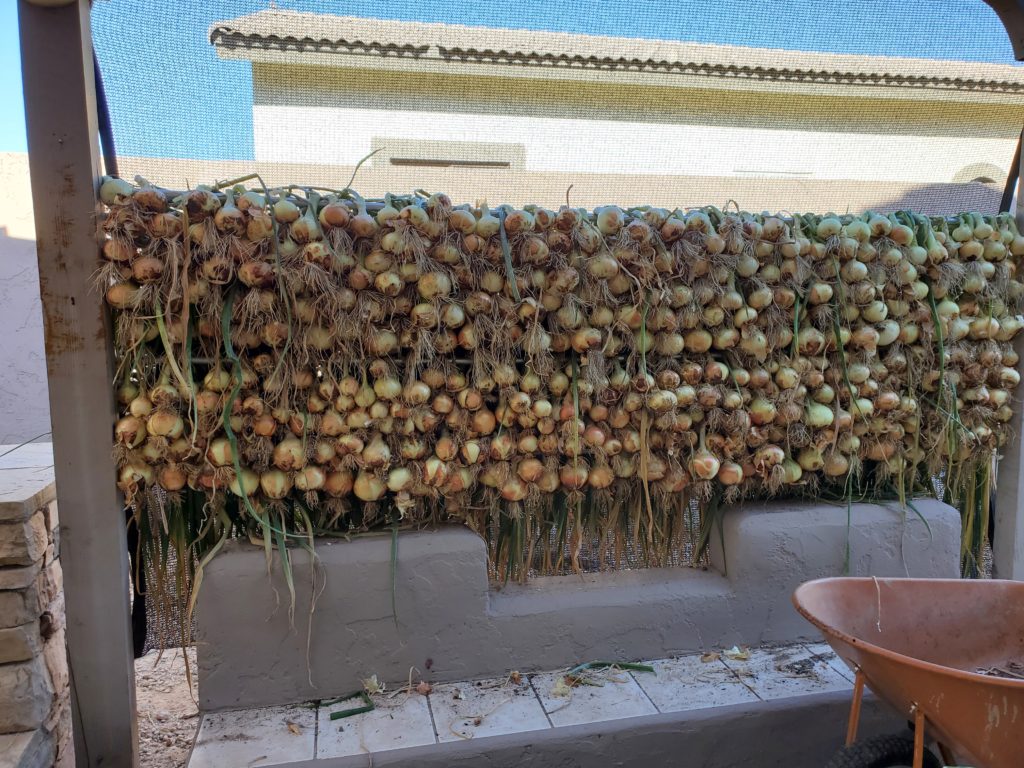

Welcome to Issue 3 of The Onion Patch! Pictured here is
Ms. Lupe Contreras, one of my most valued and loyal employees. Given that
her hands are moving so fast that they're a blur, it's obvious that Lupe
was too busy to stop to pose for this picture. This year's crop is
absolutely gorgeous, and we're thankful that our recent cold spell didn't
drop temperatures low enough to damage it.
Onions are hardy to 20 degrees, and it
usually takes single-digit temperatures to kill them. If you receive your
plants and the weather prohibits you from planting them right away,
spread them out in a cool, dry place. A young onion can live off its bulb
for up to two weeks.
If you've already planted your onions
and expect a cold spell, the best thing to do is protect them by covering
them with straw or blankets. A few degrees can make a big difference.
On another note, lots of folks have
asked about the Sweet Sandwich onion. For the past six years, I've
purchased the entire production of Sweet Sandwich seed. Each year the
germination has dropped significantly, so the seed company has
discontinued it. Copra makes an excellent replacement in the Northeast
and Northwest, First Edition in the Midwest. Both are outstanding
keepers, although neither sweetens during storage quite like Sweet
Sandwich.
The next issue will come out in March,
and we look forward to seeing you then. Meanwhile, if you have any
questions, please give us a call at 877-367-1015
or send us your questions here. We'll be happy
to help!
Bruce "Onionman" Frasier
Onion of the Month:
Copra
Sweet
and Strong
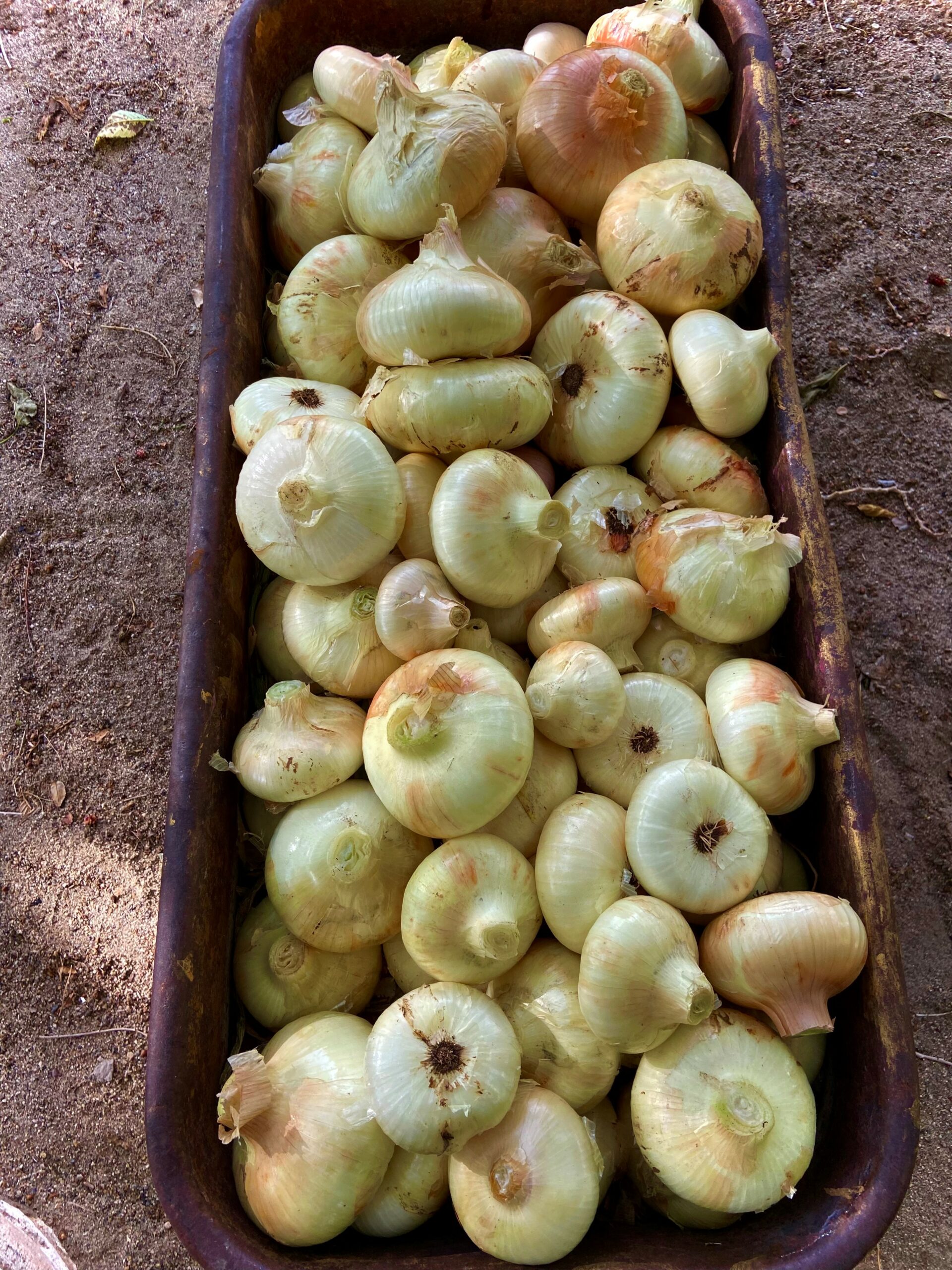
The Copra is a medium-sized, sweet
hybrid onion that's great for cooking. It's characterized by a thin neck,
a round body, and hard, thick, dark-yellow skin; when stored properly, it
stays firm, juicy, and crisp for months. The Copra is also known for its
resistance to the fungal disease fusarium. The flavor is strong, which
makes it a no-no for most salads, but it works very well with meat
dishes, especially after simmering in butter.
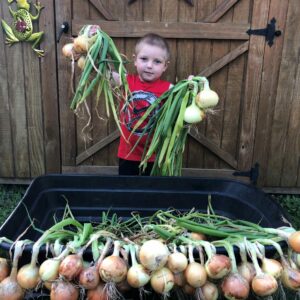
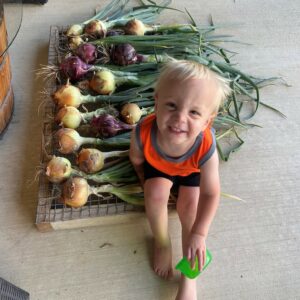
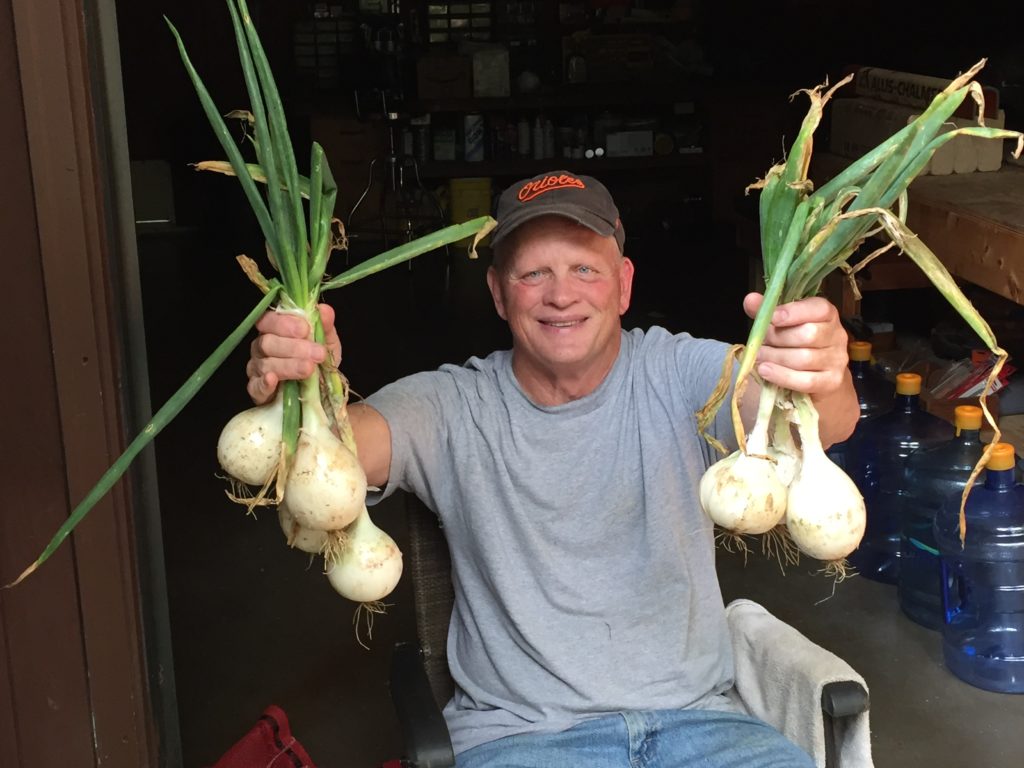
This regular customer from Missouri
gives a lot to his friends and neighbors, and to a place called
Friendship Manor. The people there are on fixed incomes but cook for
themselves. He provides them with plenty of extra produce, including these
onions!
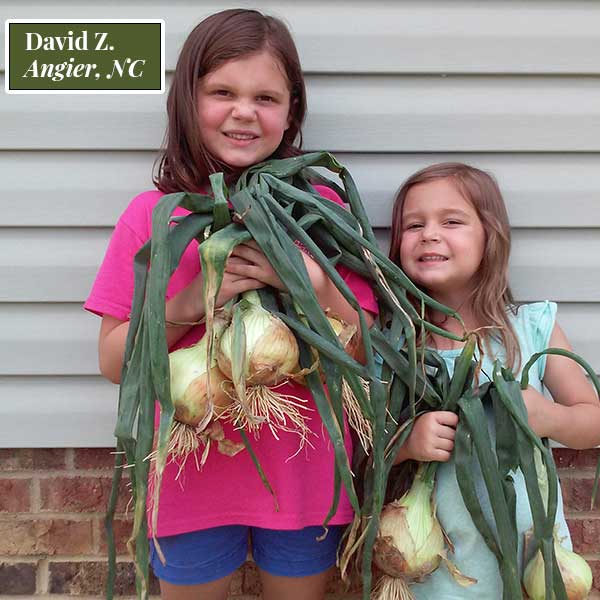
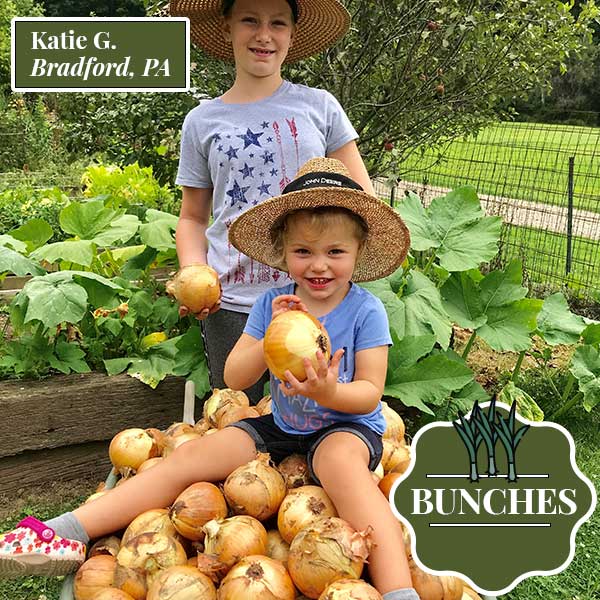
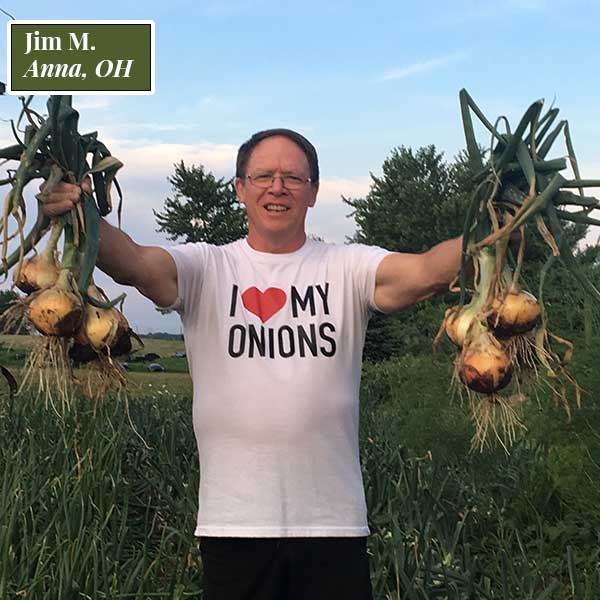
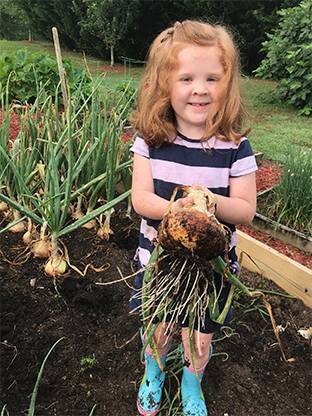
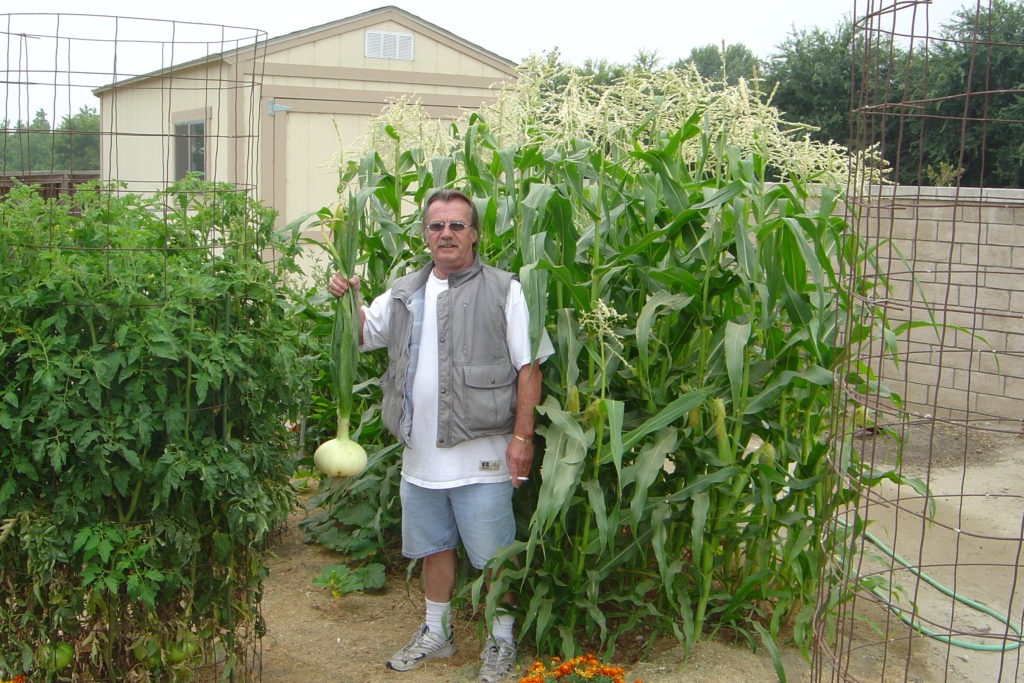
We love hearing from customers. Send us
your favorite "onion photo" and we'll try to include it in a
future newsletter. To email photos, send them to customerservice@dixondalefarms.com.
From Jeanie's Kitchen
Shrimp
Ceviche
3 lbs small raw shrimp, cleaned
4 large tomatoes, seeded and diced
6 limes, juiced
4 lemons, juiced
1 cup cilantro leaves, chopped
1 Serrano chile pepper, seeded and finely chopped
1 onion, diced
Salt and pepper to taste
3 tbsp tomato sauce
Put shrimp in the bottom of a glass
baking dish. Pour lemon and lime juice over them, and refrigerate for
three hours. The juice will "cook" the shrimp. Toss with
remaining ingredients and refrigerate for one more hour or longer.
Q&A: Fertilizing
Q.
How should I fertilize my onions?
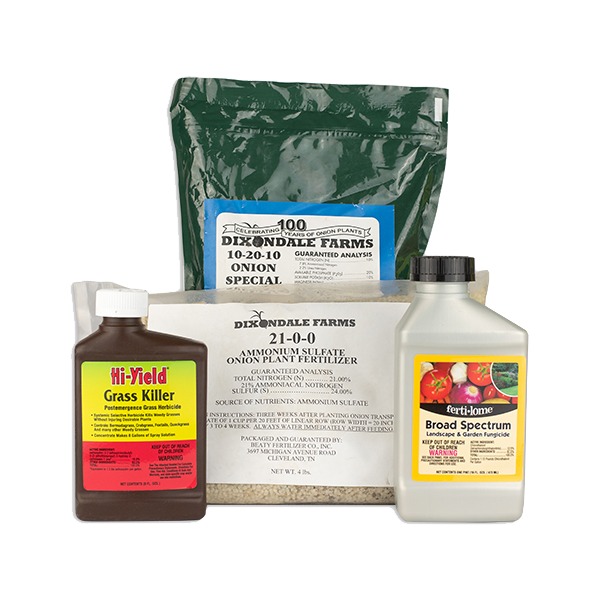
A. Before planting, apply a balanced
fertilizer (10-20-10) in bands three inches below the surface, and
within 10 inches of where you'll plant the onions. Phosphate, potash,
copper, manganese, and zinc are usually applied only at planting. For
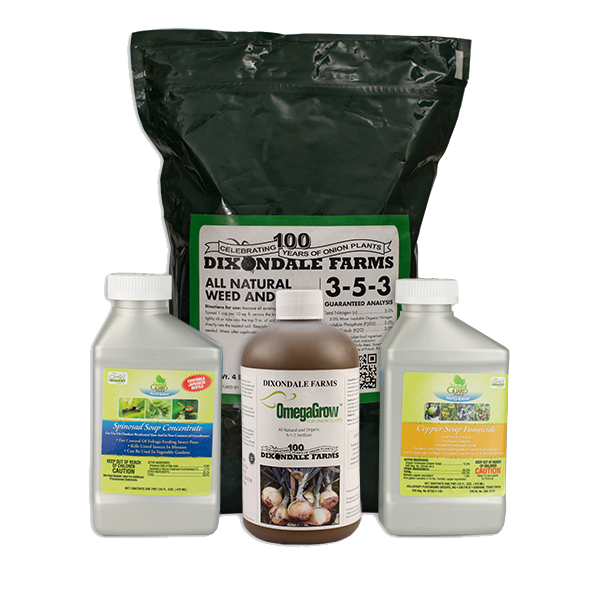
convenience, you can buy
your starter fertilizer from us when you order your onions.
Once the onions are established (three
weeks after planting), they'll require more nitrogen for leaf formation.
An onion typically generates a new leaf every 2-3 weeks. When you receive
your transplants from us, they generally have 4-5 leaves. The perfect
onion has 13 rings, so the key is to generate as many large leaves as you
can before the onion starts bulbing.
Feeding the onion every 2-3 weeks with a
good source of nitrogen, such as ammonium
sulfate (21-0-0), is essential. Water the onions after every
application, because the only way for the plant to take up the nitrogen
is through the root system. Once the onion starts bulbing, additional
nitrogen shouldn't be applied, since it will produce bulbs with thick
necks. These won't shrink on drying, and therefore won't store well.
Onion Factoid
There are fewer than 1,000 commercial
onion farmers in America. We're one of the few and the proud!
About Dixondale Farms
As the largest and oldest onion plant farm in the US, Dixondale Farms offers a wide selection of top-quality, disease-free, ready-to-plant onion plants. To see our complete product line, request a catalog, or for growing tips and cultural information, visit our web site by clicking here.
Whether you're planting one bunch or thousands of acres, we're committed to your success. If you have either questions or suggestions, we'd love to hear from you. You can reach us from 8AM to 5PM Central Time at 877-367-1015, or email us any time at customerservice@dixondalefarms.com.